


ARMO-Systems Presented a Two-Position IPDL-52 Manufactured by PTK IVS with a Control Zone of up to 100 m
PDL-52 from the Russian manufacturer PTK IVS is a two-position linear smoke fire detector, which is designed to monitor extended spaces - up to 100 m.
IPDL-52 from the Russian manufacturer PTK IVS is a two-position linear smoke fire detector, which is designed to monitor extended spaces - up to 100 m.
This model uses a two-channel optical system, which, together with noise-resistant signal processing algorithms, ensures a low probability of false alarms. In addition, the two-position IPDL-52 supports flexible settings depending on the characteristics of the protected premises, allowing you to select the receiver and transmitter synchronization mode, the response threshold value (50%, 37% and 25%) and the sensitivity compensation speed.
Structurally, the two-position linear detector IPDL-52 (IP212-52) consists of two separate parts - a receiver and a transmitter, which have identical rectangular plastic housings with a board with radio elements and an optical system located inside. The presence of an electric screen along the inner surface of the housing of both the receiver and the transmitter ensures their reliable protection from electromagnetic interference. At the same time, the maximum response distance supported by the two-position IPDL , i.e. the distance of the receiver from the transmitter, can reach 100 meters and depends on the geometry of the protected premises and other specifics of the facility.
The original optical system allows to reduce the probability of false alarms when insects or other foreign objects appear on the outer surface of the lenses of the two-position IPDL-52. It is based on two independent optical units, the so-called two-lens (two-channel) design. Two-lens systems also have a flatter top of the directional diagram, due to which the two-position IPDL is able to operate stably for a long time and does not require complex adjustment: angular movements of the receiver and transmitter housing relative to each other are possible by ± 40 degrees in the horizontal plane and by ± 15 degrees in the vertical plane.
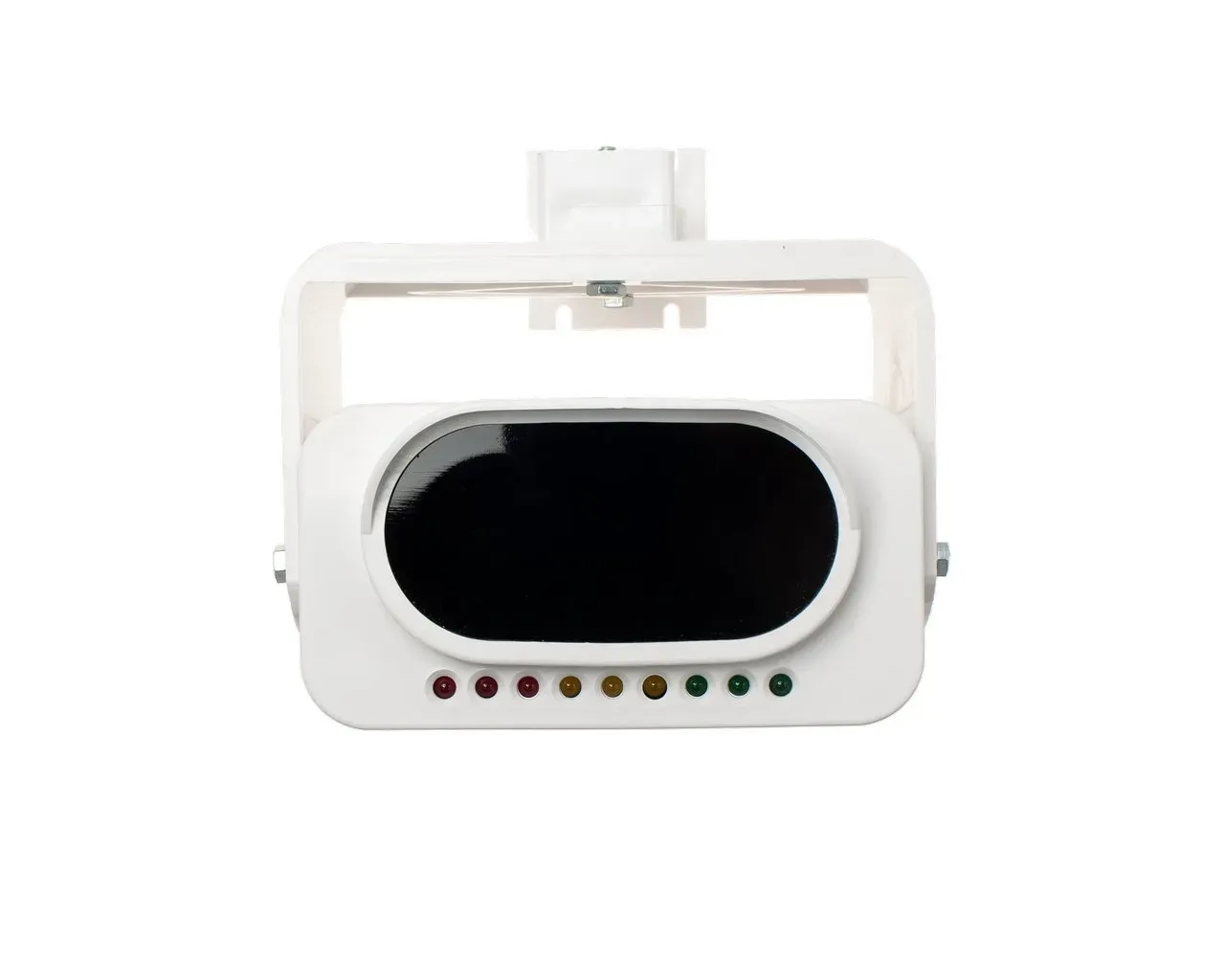
The implementation of original solutions for synchronizing the operation of the receiver and transmitter allowed minimizing the total energy consumption of the two-position IPDL. At the same time, depending on the characteristics of the protected premises, one of two possible synchronization modes can be selected: forced (via the communication line) and self-synchronization (via the optical beam). The choice in favor of the first mode is almost always preferable, since with it the two-position IPDL provides higher resistance to the effects of external optical interference. The self-synchronization mode is recommended for use when the distance between the receiver and the transmitter is no more than 50 m, and laying a communication line between them is difficult.
The selection of the response threshold of the IPDL-52 detector is determined by two main tasks for protecting the premises (ensuring the earliest possible detection of a fire source or maximum resistance to possible interference effects on the optical beam) and the distance between the receiver and the transmitter. For protected premises with normal (average) conditions for the use of the IPDL, it is recommended to set the response threshold at 25% for distances from 8 to 20 m, 37% for distances from 15 to 45 m and 50% for distances from 30 to 100 m. In addition, the two-position IPDL supports fast and slow sensitivity compensation modes, which are designed for correct operation of the detector in unheated and heated premises, respectively.